LinkNet.Ge
KA
LinkNet engineering service

Access Control & Entry Management Systems

Access control design and installation with RFID, PIN, mobile and biometric credentials, electronic locks, turnstiles, and centralised management.

Access Control & Entry Management Systems

Complete engineering solution

Design • Installation • Support

Why is centralised access control safer and easier to manage?

An access control system determines who may enter a facility or protected area, where access is permitted, and when that permission applies. Unlike mechanical keys, electronic access enables centralised rights management, immediate credential revocation, and a searchable event history.

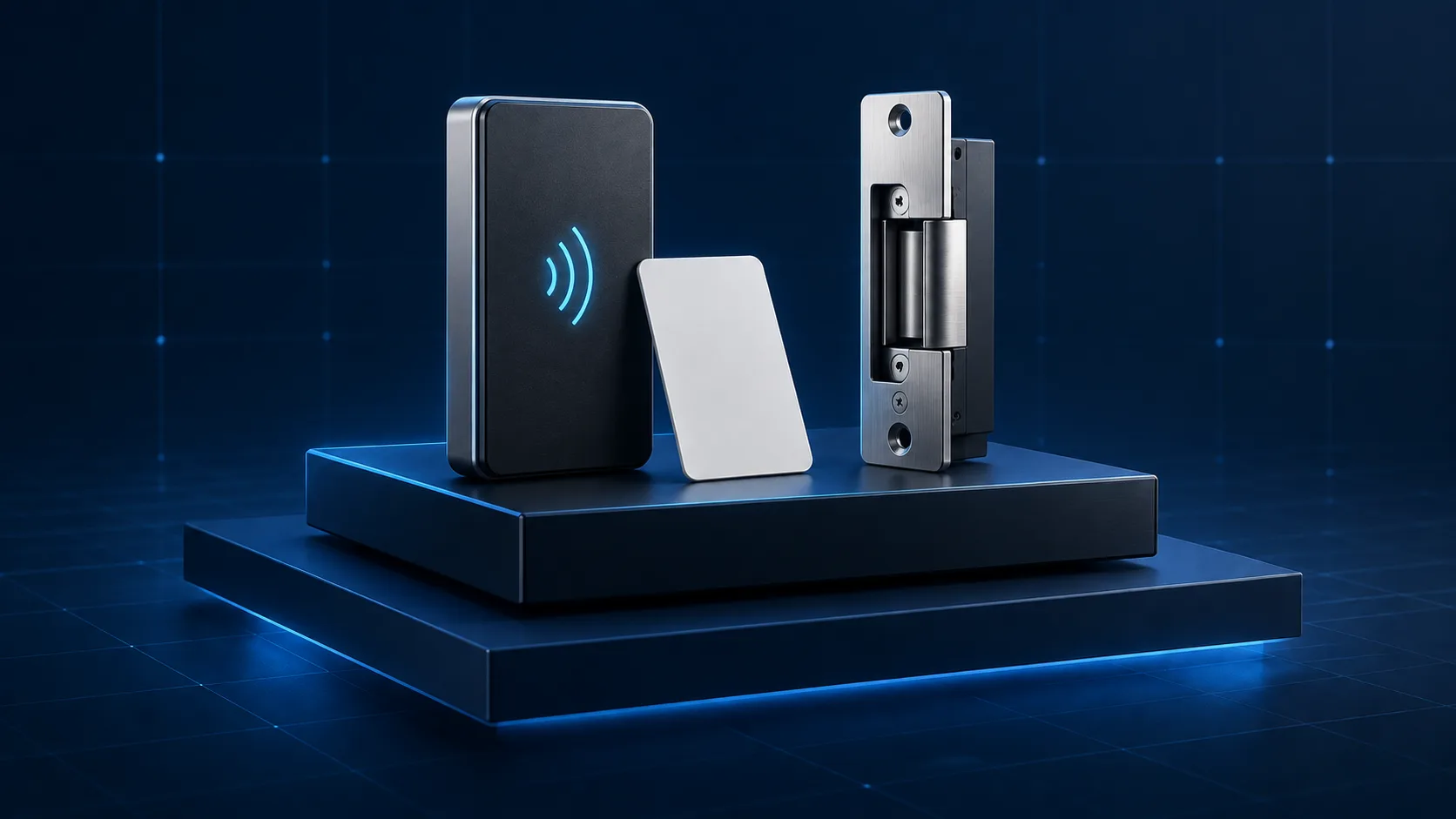
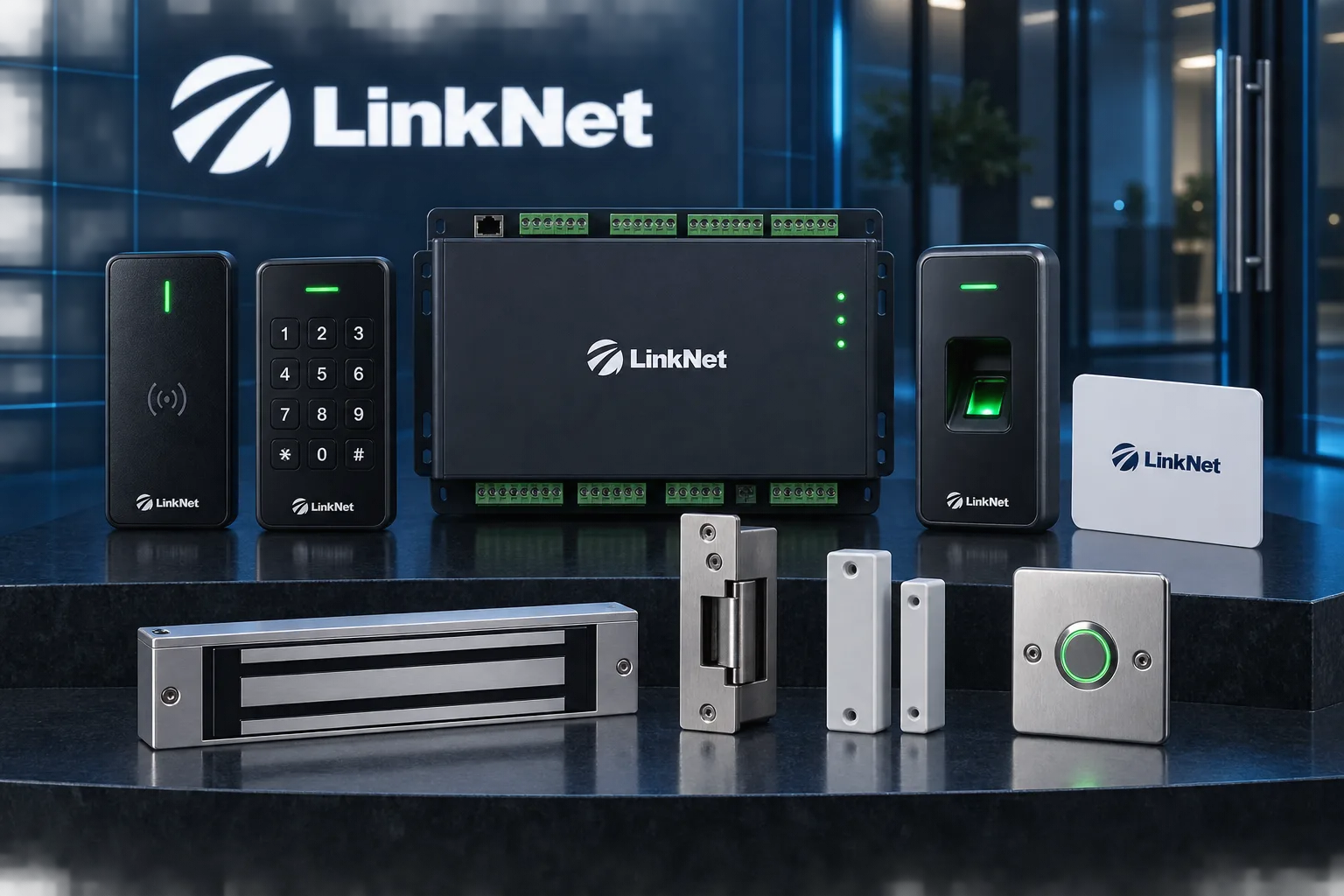
LinkNet.Ge designs and installs access control for offices, hotels, residential developments, industrial facilities, warehouses, server rooms, and other restricted areas. A solution can combine RFID cards, PIN codes, mobile or biometric identification, network controllers, electromagnetic or electromechanical locks, turnstiles, barriers, and centralised management software.

Why is centralised access control safer and easier to manage?

Manage who enters, where, and when from one system

Effective access control is more than a card reader. The complete system combines door mechanics, identity technology, controllers, locks, standby power, software permissions, and safe egress logic.

Employees and visitors can be assigned specific doors, zones, schedules, and expiration dates. A lost credential is revoked in software, while the event log gives administrators visibility into granted, denied, and technical events.

  • Planning entrances, protected zones, and user roles
  • Selecting RFID, PIN, mobile, or biometric identification
  • Installing controllers, readers, and electronic locks
  • Configuring schedules, roles, and temporary credentials
  • Functionally testing doors, emergency egress, and event logging

From door hardware to centralised access management

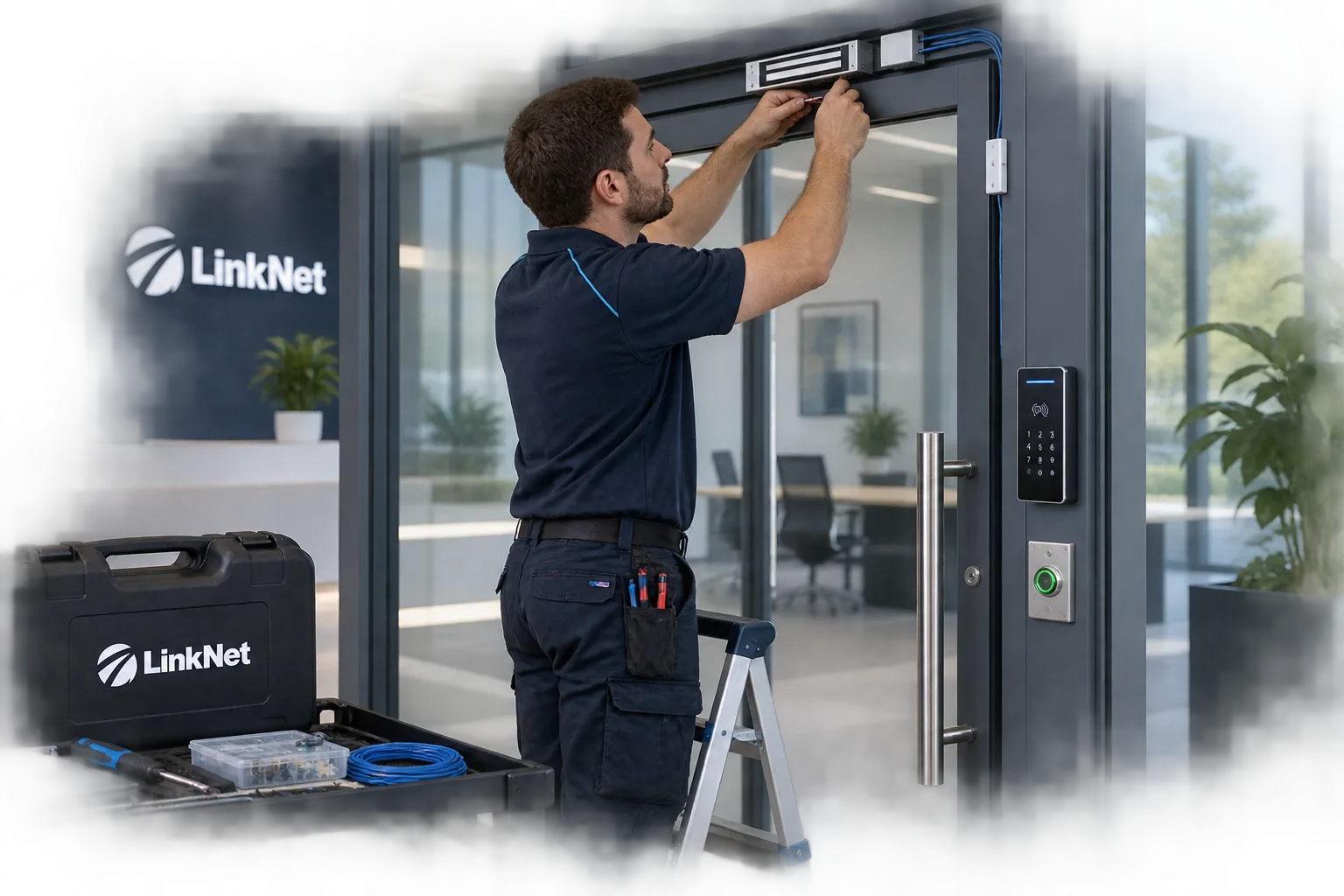
Reader, controller, and electronic lock installation

Reader, controller, and electronic lock installation

Each door is assessed for construction, opening direction, traffic level, and safe-egress requirements. This determines whether an electromagnetic lock, electric strike, or another mechanism is appropriate, along with the door contact, request-to-exit device, and standby power.

An RFID, PIN, mobile, or biometric reader connects to a network controller that makes local access decisions and sends events to the central management system.

  • Assessing door construction and expected traffic
  • Selecting fail-safe or fail-secure lock behaviour
  • Installing readers, door contacts, exit devices, and controllers
  • Testing standby power, emergency egress, and door scenarios
Role-based permissions and centralised management

Role-based permissions and centralised management

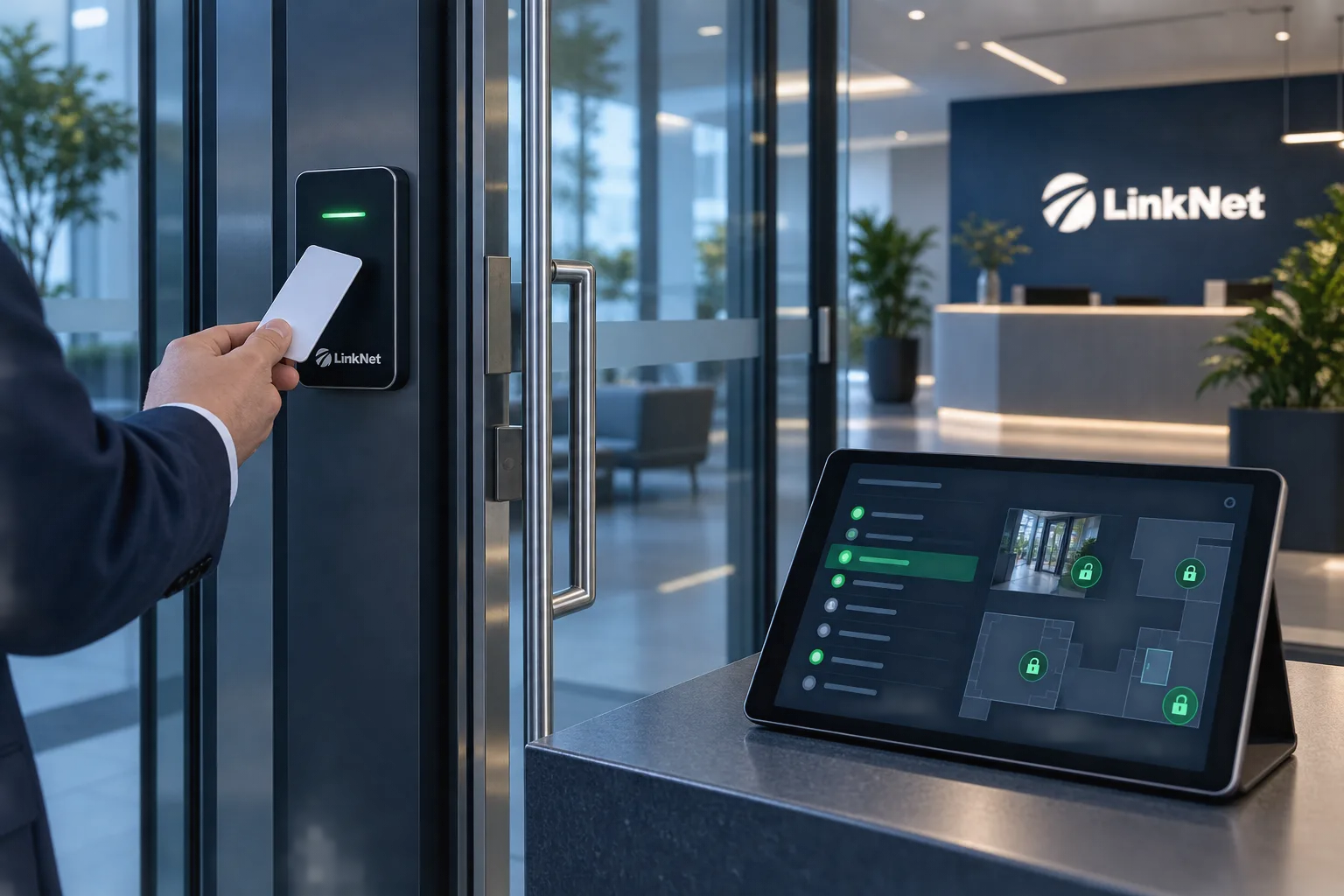
Users are organised by department, role, and security level. Each group receives access to specific doors and zones, defined schedules, and an expiration date where required.

Administrators can revoke a lost credential immediately, create temporary visitor permissions, review denied attempts, and prepare reports. Before biometric identification is introduced, its necessity, data-processing purpose, and protection measures should be assessed separately.

  • Separate roles for employees, visitors, and contractors
  • Managing doors, zones, schedules, and credential expiry
  • Reviewing entry events, exceptions, and reports
  • Data minimisation and a necessity assessment for biometric use

Core capabilities

  • Site audit and access-point design

    01
  • RFID, PIN, mobile, and biometric identification systems

    02
  • Network controller and door-reader installation

    03
  • Electromagnetic, electromechanical, and electric strike locks

    04
  • Turnstile, barrier, and lift-access integration

    05
  • Roles, time zones, schedules, and temporary visitor access

    06
  • Event logs, reporting, and time-attendance functionality

    07
  • Diagnostics, administrator training, and technical support

    08

Engineering process

A clear path from requirements to a working system

Every project follows a structured engineering process—from site survey and design to system testing and ongoing support.

  1. 01

    Consultation

    We clarify the business objective and priorities.

  2. 02

    Site survey

    We assess the environment, existing systems, and constraints.

  3. 03

    Engineering & design

    We create the architecture, diagrams, and scope of work.

  4. 04

    Equipment selection

    We select a compatible and scalable technical solution.

  5. 05

    Installation

    We complete cabling and install the required equipment.

  6. 06

    Configuration

    We configure networks, access, and system parameters.

  7. 07

    Testing & handover

    We verify the result and provide the required documentation.

  8. 08

    Maintenance

    We continue with support and planned technical care.

Infrastructure tailored to your facility

Solutions adapt to facilities of different scales and purposes, with their technical environment taken into account.

  • Hotels
  • Offices
  • Manufacturing
  • Warehouses
  • Retail
  • Residential
  • Education
  • Healthcare
  • Construction

What to know before starting a project

Clear answers to the questions that most often arise when planning this service.

How much does an access control system cost?

Cost depends on the number of doors and access points, credential technology, lock type, controllers, turnstiles, cable routes, and software features. An accurate quotation follows an assessment of technical requirements and door construction.

What is the difference between RFID, PIN, and biometric access?

RFID credentials are convenient for daily use and quick revocation. A PIN can be used independently or as a second factor. Biometric identification is linked to an individual, but requires a separate assessment of necessity, legal basis, and data-protection controls.

Can access control be installed on an existing door?

In many cases, yes. The door material, frame, opening direction, existing lock, cable route, and safe-egress requirements are assessed first. An electromagnetic lock, electric strike, or another compatible mechanism is then selected.

What happens during a power failure?

Behaviour depends on the fail-safe or fail-secure configuration, the door purpose, and safe-egress requirements. Standby power can keep controllers and locks operating for a defined period. Emergency behaviour is designed and tested in advance.

Can the system record employee attendance?

Yes. With compatible controllers and software, entry and exit events can support time-attendance reports. The exact logic depends on work schedules, shifts, exceptions, and the organisation’s internal policies.

How should biometric data be handled?

Biometric data requires enhanced protection. Before deployment, the processing purpose and legal basis should be defined, necessity and proportionality assessed, access restricted, retention periods established, and data-subject rights protected.

Plan the next step

Planning a new infrastructure project?

Our team will help you plan, select, and shape the right technical direction for your project.

Fast response

Within 24 hours

Professional team

Dedicated to your project

Our office

Tbilisi, Georgia

Open in Google Maps

Working hours

Plan your visit at a time that works for you

Today
09:00 – 18:00
Monday
09:00 – 18:00
Tuesday
09:00 – 18:00
Wednesday
09:00 – 18:00
Thursday
09:00 – 18:00
Friday
09:00 – 18:00
Saturday
10:00 – 16:00
Sunday
Closed
Request a free consultation