LinkNet.Ge
KA
LinkNet engineering service

Addressable Fire Detection & Alarm Systems

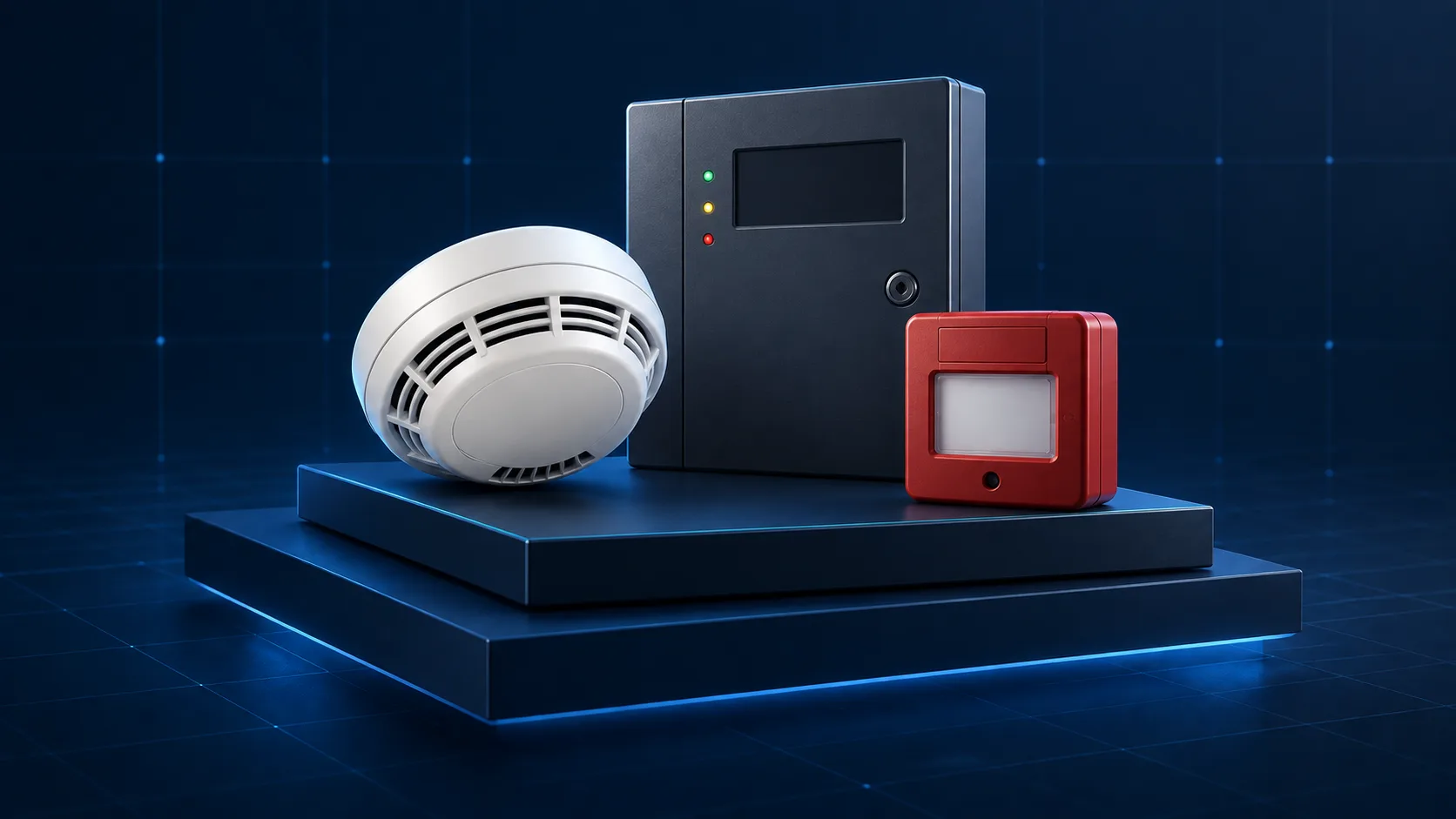
Fire alarm design and installation, smoke and heat detection, zoning, panel programming, functional testing, and planned maintenance.

Addressable Fire Detection & Alarm Systems

Complete engineering solution

Design • Installation • Support

Why does professionally designed fire detection matter?

A fire detection and alarm system is a critical part of early fire discovery, timely occupant notification, and coordinated response. An effective solution begins with a risk assessment rather than the routine placement of detectors.

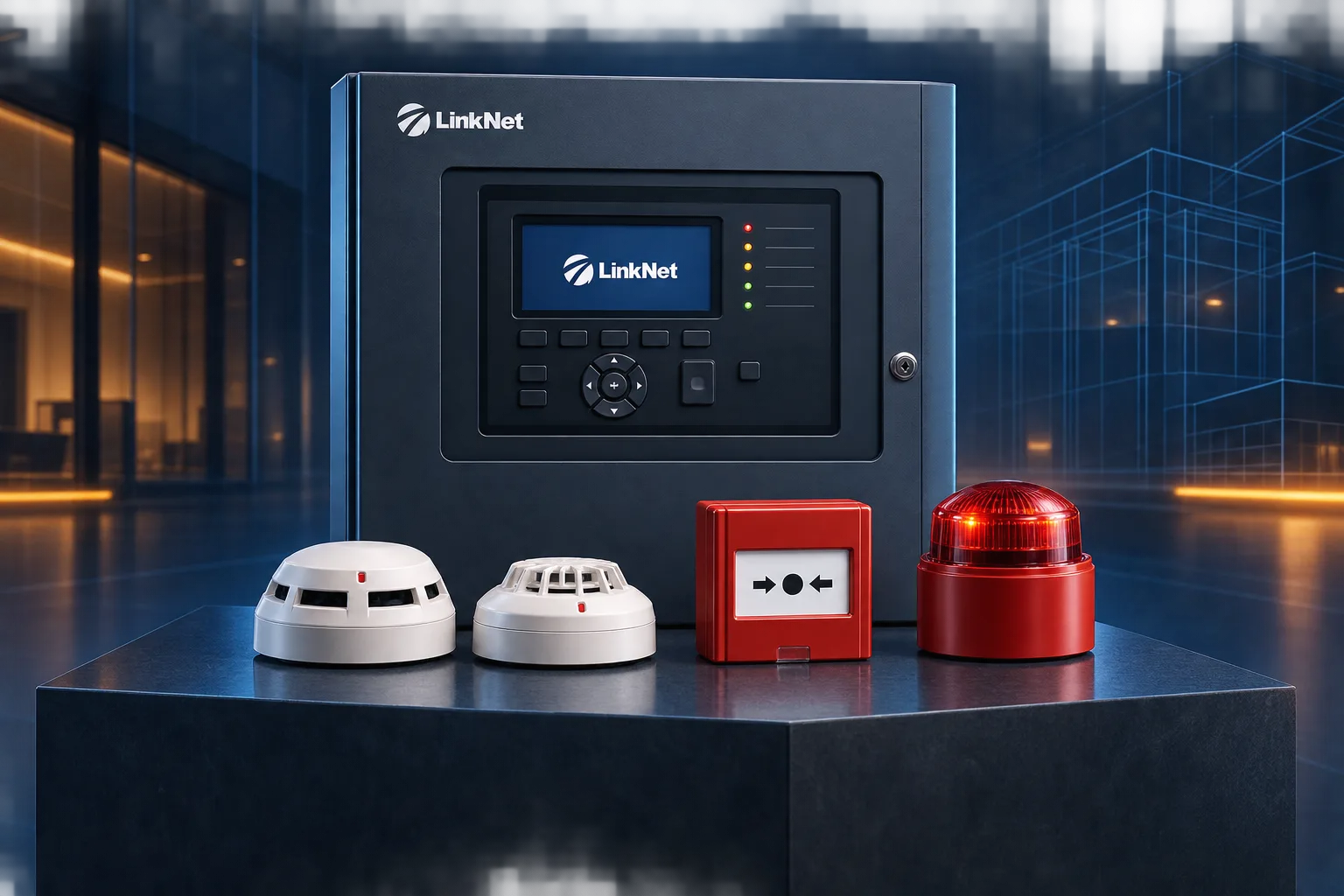
LinkNet.Ge designs and installs fire alarm systems for offices, hotels, retail and warehouse facilities, industrial sites, and multi-use buildings. The scope can include addressable or conventional architecture, smoke and heat detector placement, manual call points, sounder and strobe devices, control-panel integration, programming, and functional testing.

Why does professionally designed fire detection matter?

Early fire detection and precise zone identification

System performance depends on detector type, coverage logic, zoning, cable infrastructure, and alarm cause-and-effect scenarios. Design decisions account for room use, ceiling height, airflow, dust, temperature, and potential false-alarm sources.

An addressable fire alarm system can identify the specific device at the control panel, while clearly organised zones help responsible personnel locate an event quickly.

  • Site survey, fire-risk assessment, and system architecture planning
  • Selection of smoke, heat, and multi-criteria detectors
  • Correct planning of addressable loops or conventional zones
  • Placement of manual call points and audible or visual notification devices
  • Panel programming, functional testing, and documented handover

From design to a commissioned and tested fire alarm system

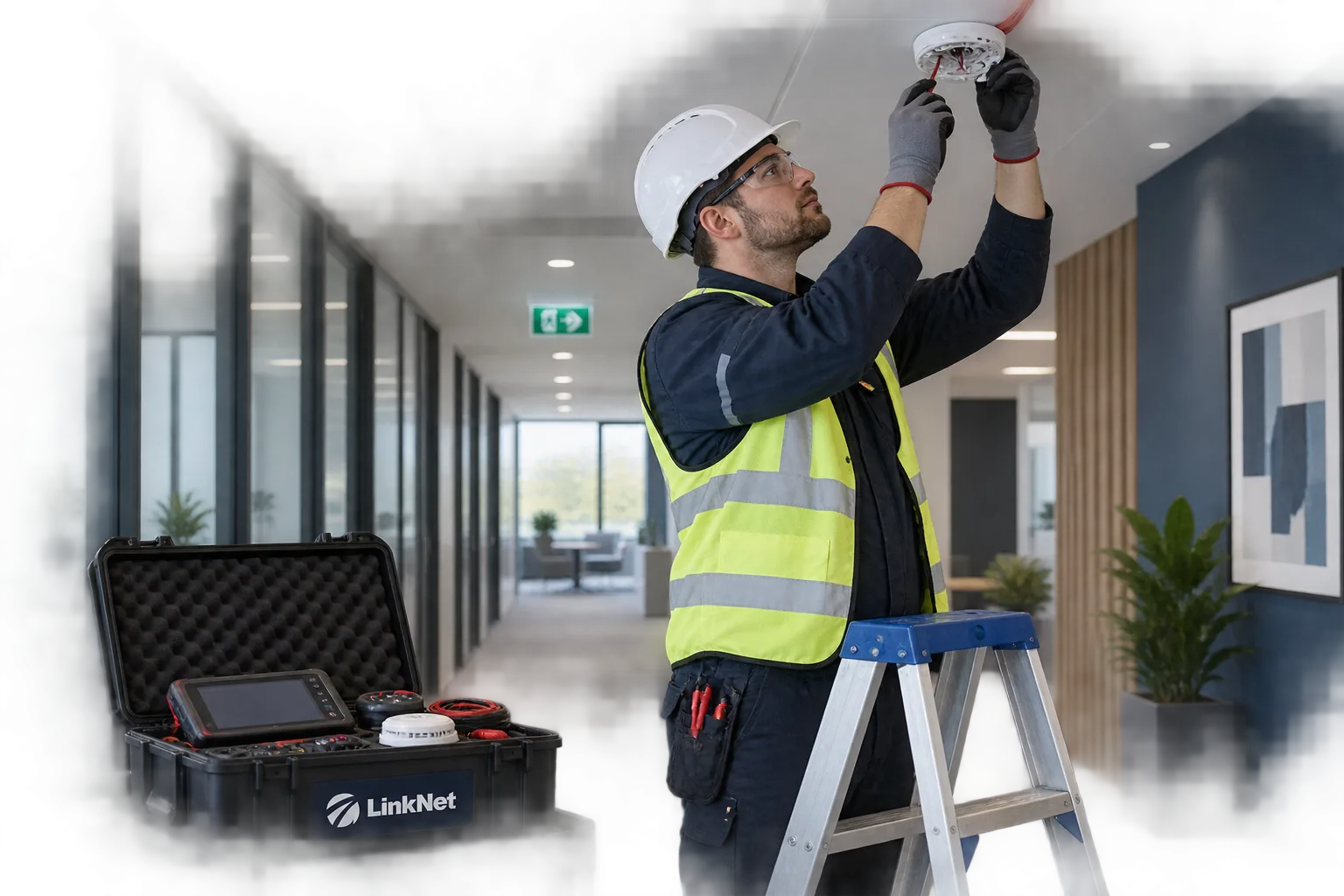
Risk assessment, detector selection, and zoning

Risk assessment, detector selection, and zoning

The first stage evaluates room use, layout, ceiling construction, airflow, and environmental conditions. These findings determine detector technology, quantity, placement, and cable routes.

Smoke detection is effective for identifying early combustion products, while heat or multi-criteria detection may be more suitable where environmental conditions could influence a smoke sensor.

  • Assessing room use and potential fire risks
  • Selecting smoke, heat, or multi-sensor detection
  • Planning addressable loops or conventional zones
  • Accounting for fire-resistant cable, circuit labelling, and backup power
Panel programming, functional testing, and handover

Panel programming, functional testing, and handover

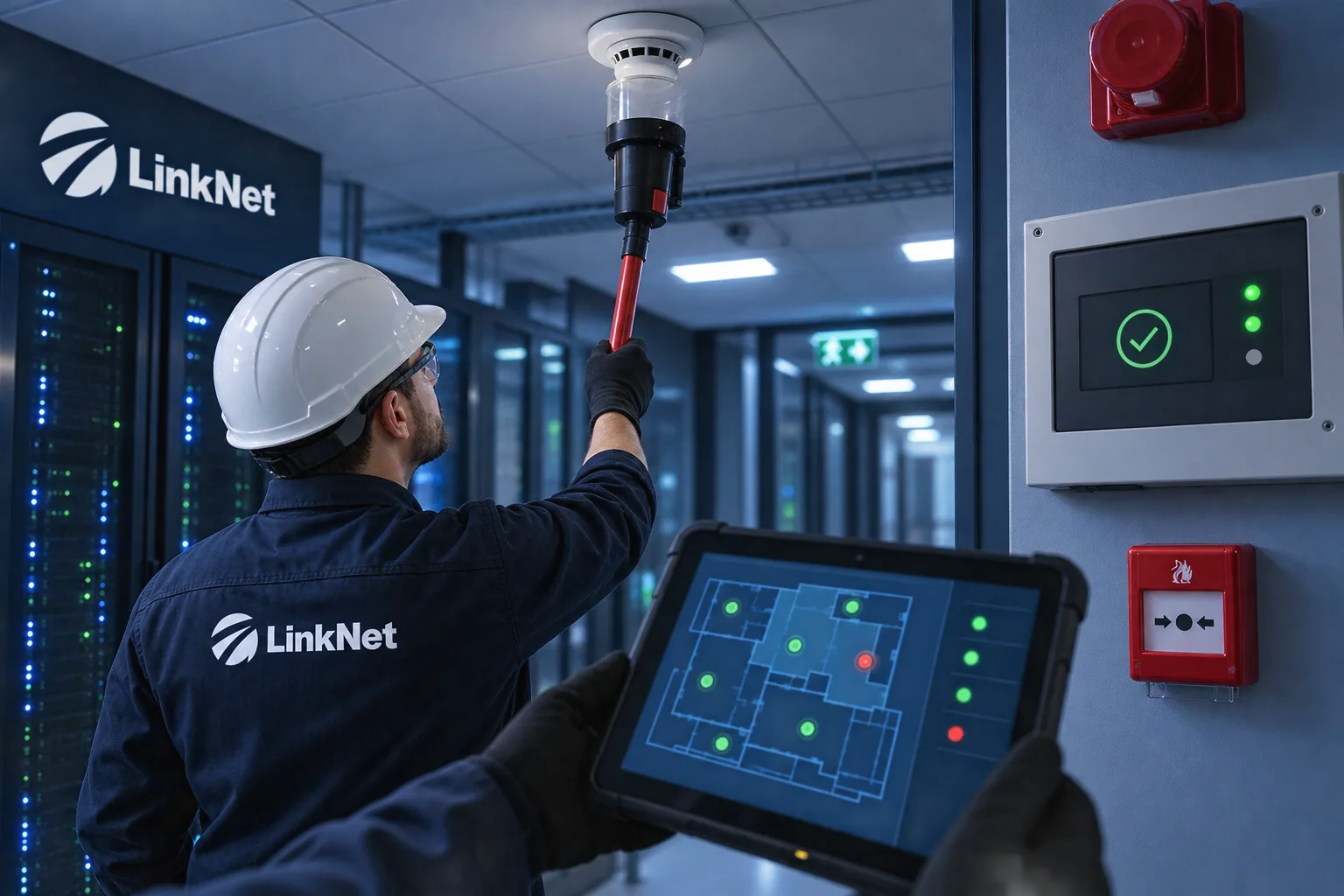
After installation, we verify device addresses, loops and zones, cable integrity, standby power, and correct event display at the panel. Alarm scenarios are tested by activating detectors, manual call points, sounders, and strobes.

At handover, the system is labelled and prepared for periodic inspection and maintenance. Service intervals are determined with regard to the project, manufacturer documentation, and applicable requirements.

  • Programming the panel, loops, zones, and field devices
  • Functionally testing detectors, manual call points, and notification devices
  • Checking fault, alarm, and standby-power conditions
  • Providing labelling, test results, and maintenance documentation

Core capabilities

  • Fire-risk assessment and system design

    01
  • Addressable and conventional fire alarm installation

    02
  • Smoke, heat, and multi-criteria detector installation

    03
  • Manual call point, sounder, and strobe integration

    04
  • Fire alarm panel, loop, and zone programming

    05
  • Backup power, cable, and field-device verification

    06
  • Functional testing of alarm scenarios, detectors, and notification devices

    07
  • Fault diagnostics, planned maintenance, and documentation

    08

Engineering process

A clear path from requirements to a working system

Every project follows a structured engineering process—from site survey and design to system testing and ongoing support.

  1. 01

    Consultation

    We clarify the business objective and priorities.

  2. 02

    Site survey

    We assess the environment, existing systems, and constraints.

  3. 03

    Engineering & design

    We create the architecture, diagrams, and scope of work.

  4. 04

    Equipment selection

    We select a compatible and scalable technical solution.

  5. 05

    Installation

    We complete cabling and install the required equipment.

  6. 06

    Configuration

    We configure networks, access, and system parameters.

  7. 07

    Testing & handover

    We verify the result and provide the required documentation.

  8. 08

    Maintenance

    We continue with support and planned technical care.

Infrastructure tailored to your facility

Solutions adapt to facilities of different scales and purposes, with their technical environment taken into account.

  • Hotels
  • Offices
  • Manufacturing
  • Warehouses
  • Retail
  • Residential
  • Education
  • Healthcare
  • Construction

What to know before starting a project

Clear answers to the questions that most often arise when planning this service.

How much does fire alarm system installation cost?

Cost depends on facility area and layout, system type, detector and zone count, cable routes, notification devices, and integration requirements. An accurate quotation is prepared after reviewing the technical scope and, where necessary, surveying the site.

What is the difference between addressable and conventional fire alarm systems?

A conventional system reports an alarm at zone level, while an addressable system can identify a specific device at the control panel. The right architecture depends on facility size, layout, management needs, and project requirements.

When should smoke detectors or heat detectors be used?

Smoke detectors are used where early detection of combustion products is important. Heat or multi-criteria detection may be more suitable in spaces affected by high humidity, dust, steam, or other environmental factors. The final selection follows an assessment of the protected area.

Can a fire alarm panel integrate with other building systems?

Where compatible interfaces and an approved design are available, alarm outputs can integrate with audible and visual notification, access control, building engineering controls, or monitoring systems. The exact cause-and-effect sequence must be defined in advance and functionally tested.

How often should a fire alarm system be inspected?

Inspection and maintenance intervals depend on the system design, manufacturer documentation, operating conditions, and applicable requirements. A planned schedule, event records, and prompt correction of identified faults are important.

Can an existing fire alarm system be diagnosed or upgraded?

Yes. An audit can verify the panel, circuits, detectors, standby power, zones, and alarm scenarios. Based on the findings, faulty devices can be replaced, programming corrected, additional zones added, or the system upgraded in stages.

Plan the next step

Planning a new infrastructure project?

Our team will help you plan, select, and shape the right technical direction for your project.

Fast response

Within 24 hours

Professional team

Dedicated to your project

Our office

Tbilisi, Georgia

Open in Google Maps

Working hours

Plan your visit at a time that works for you

Today
09:00 – 18:00
Monday
09:00 – 18:00
Tuesday
09:00 – 18:00
Wednesday
09:00 – 18:00
Thursday
09:00 – 18:00
Friday
09:00 – 18:00
Saturday
10:00 – 16:00
Sunday
Closed
Request a free consultation