LinkNet.Ge
KA
LinkNet engineering service

Fiber Optic & Backbone Infrastructure

Fiber-optic network design, cable installation, fusion splicing, ODF termination, OTDR testing, and documented handover.

Fiber Optic & Backbone Infrastructure

Complete engineering solution

Design • Installation • Support

Why is fiber-optic infrastructure the right choice for backbone connectivity?

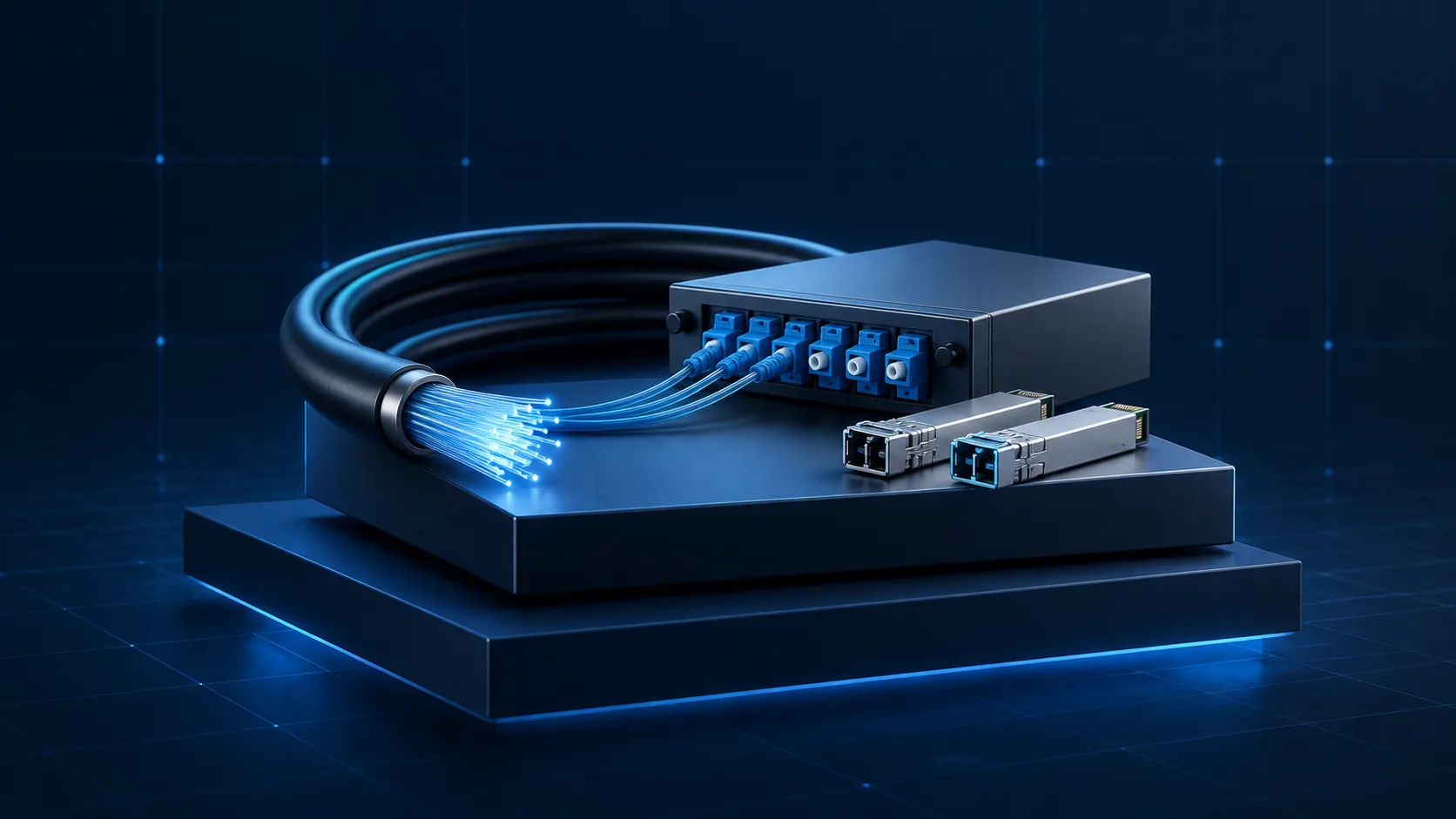
A fiber-optic network provides the speed, capacity, and long-distance stability required by modern business infrastructure. A properly designed fibre backbone connects buildings, server rooms, industrial areas, and core network nodes with minimal signal loss.

LinkNet.Ge delivers fiber-optic cable installation, fusion splicing, ODF termination, OTDR testing, fault diagnostics, and restoration. Each project is planned around route conditions, distance, fibre count, single-mode or multimode requirements, and future expansion.

Why is fiber-optic infrastructure the right choice for backbone connectivity?

Fiber backbone design and professional installation

Fiber reliability depends on more than the cable itself. Route selection, bend radius, splice quality, connector cleanliness, and final measurements all affect performance. We plan indoor, outdoor, underground, or aerial routes and select the appropriate cable and protective infrastructure.

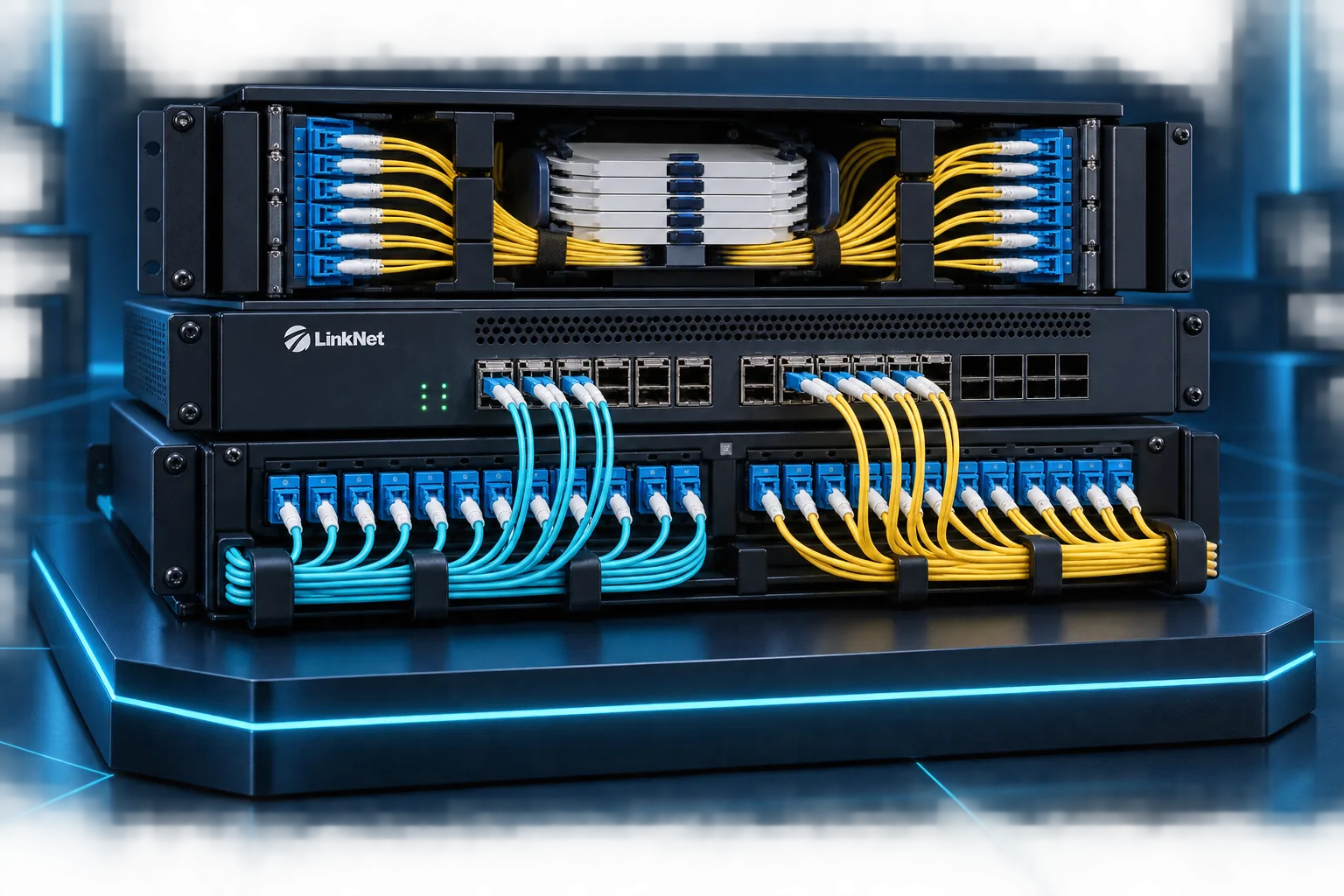
After installation, fibres are organised in the ODF, fusion spliced, labelled, and verified with OTDR and optical power meter testing.

  • Site survey and optical route planning
  • Correct selection of single-mode or multimode fibre
  • Indoor, outdoor, underground, and aerial cable installation
  • Fusion splicing, ODF termination, and SFP integration
  • OTDR testing, loss assessment, and documented handover

From design to a tested and documented optical link

Fiber backbone planning and cable installation

Fiber backbone planning and cable installation

Before installation, we assess distance, environmental conditions, cable routes, and the link purpose. This determines single-mode or multimode fibre, cable construction, protective conduit, cable containment, and the required splice closures.

The installation respects minimum bend radius, includes service loops, and uses clear end-to-end labelling.

  • Selecting single-mode or multimode fibre
  • Building underground, aerial, indoor, and outdoor routes
  • Installing protective conduits, trays, and splice closures
  • Planning spare fibre, labelling, and route documentation
Fusion splicing, ODF termination, and OTDR testing

Fusion splicing, ODF termination, and OTDR testing

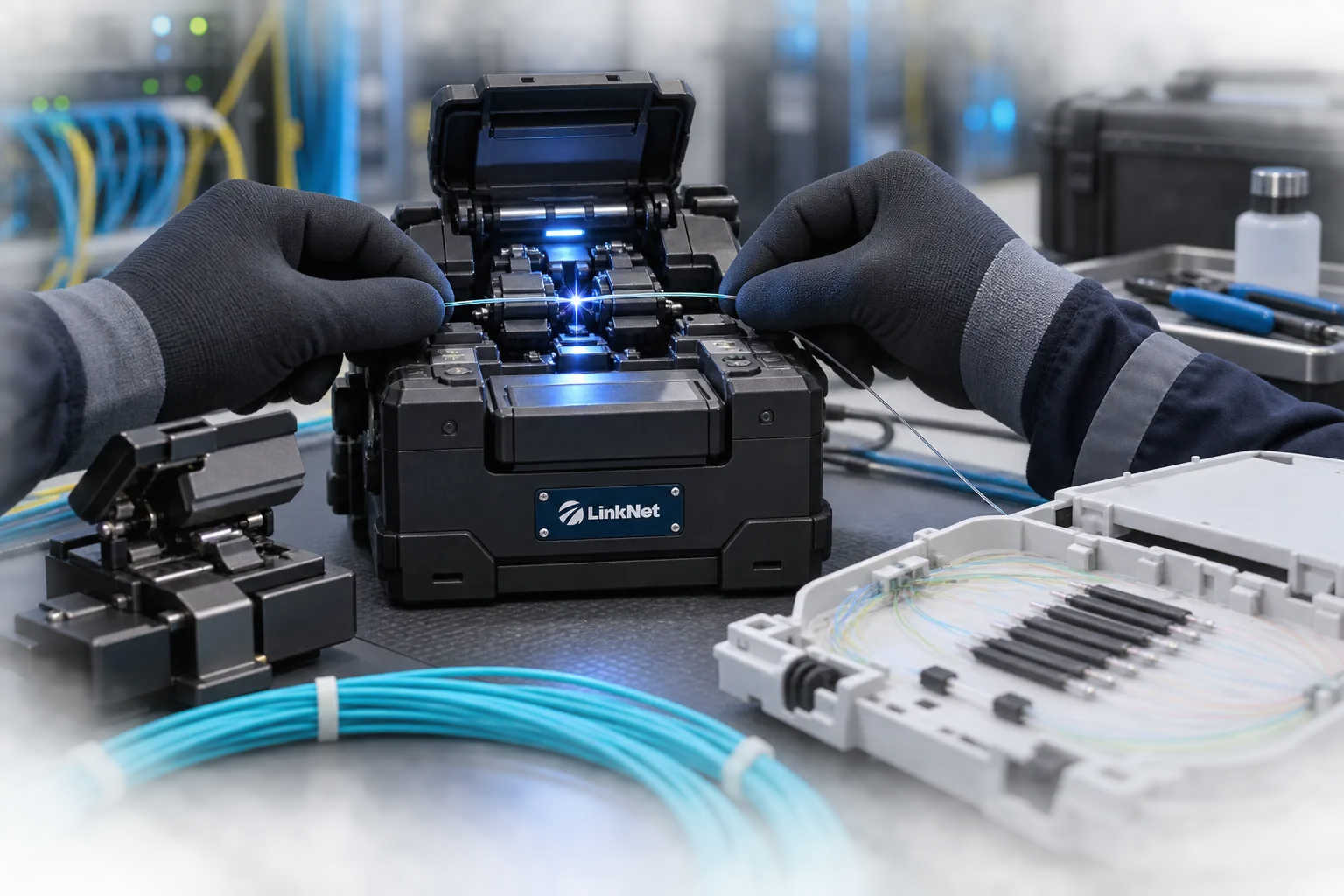
Precision fusion splicing reduces connection loss and improves link stability. Fibres are organised in splice cassettes, connectors are cleaned, and each strand is terminated in an ODF or optical patch panel.

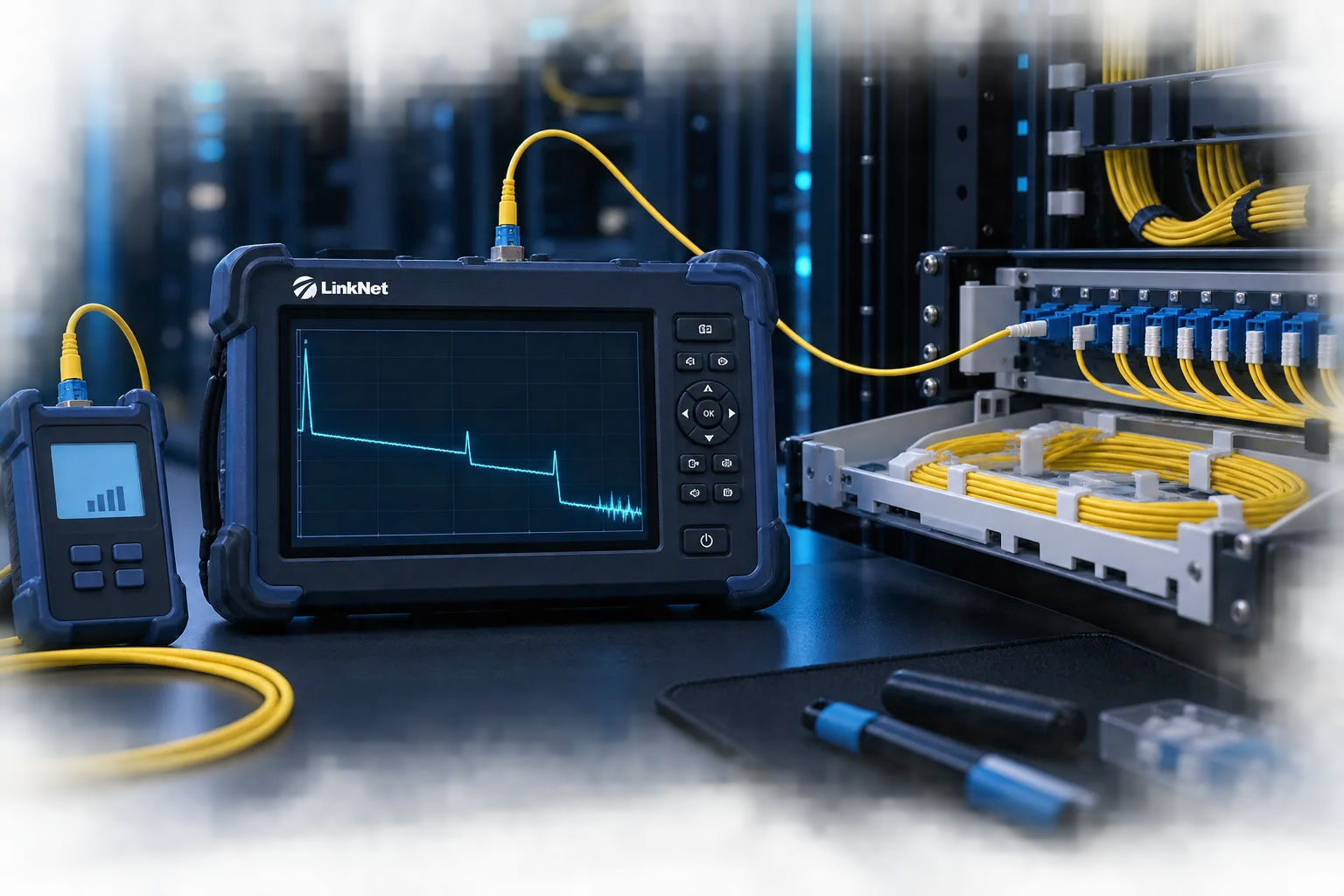
OTDR and optical power meter measurements verify link length, total loss, splice events, and possible fault locations. Results can be supplied with the handover report.

  • Precision fusion splicing and splice protection
  • ODF, patch panel, and LC/SC connector termination
  • OTDR and optical power meter link measurements
  • Documenting routes, loss values, and test results

Core capabilities

  • Fiber network audit and backbone design

    01
  • Single-mode and multimode cable selection

    02
  • Underground, aerial, indoor, and outdoor cable installation

    03
  • Fusion splicing and splice closure or cassette installation

    04
  • ODF, optical patch panel, and LC/SC connector termination

    05
  • SFP/SFP+ module and active network integration

    06
  • OTDR and optical power meter testing

    07
  • Fault location, restoration, labelling, and documentation

    08

Engineering process

A clear path from requirements to a working system

Every project follows a structured engineering process—from site survey and design to system testing and ongoing support.

  1. 01

    Consultation

    We clarify the business objective and priorities.

  2. 02

    Site survey

    We assess the environment, existing systems, and constraints.

  3. 03

    Engineering & design

    We create the architecture, diagrams, and scope of work.

  4. 04

    Equipment selection

    We select a compatible and scalable technical solution.

  5. 05

    Installation

    We complete cabling and install the required equipment.

  6. 06

    Configuration

    We configure networks, access, and system parameters.

  7. 07

    Testing & handover

    We verify the result and provide the required documentation.

  8. 08

    Maintenance

    We continue with support and planned technical care.

Infrastructure tailored to your facility

Solutions adapt to facilities of different scales and purposes, with their technical environment taken into account.

  • Hotels
  • Offices
  • Manufacturing
  • Warehouses
  • Retail
  • Residential
  • Education
  • Healthcare
  • Construction

What to know before starting a project

Clear answers to the questions that most often arise when planning this service.

How much do fiber cable installation and splicing cost?

Cost depends on route length and type, fibre count, the number of splices and ODF ports, the installation environment, and testing requirements. An accurate quotation is prepared after the scope is clarified and, when necessary, an on-site survey is completed.

What is the difference between single-mode and multimode fibre?

Single-mode fibre is suited to longer distances and high-capacity backbone links. Multimode fibre is commonly used for shorter internal connections, such as within a building or data centre. The correct choice depends on distance, speed, and active equipment.

What is fusion splicing and why is it important?

Fusion splicing joins two optical fibres precisely using a dedicated splicing machine. A correctly completed splice creates a low-loss permanent connection and reduces the risk of instability or physical failure.

What does OTDR testing verify?

OTDR testing measures optical link length and loss, identifies splice and connector events, and helps determine the distance to faults or excessive attenuation. An optical power meter measurement is often added for complete link verification.

Can a damaged fiber-optic cable be repaired?

Yes. After diagnostics, the damaged location can be identified, the affected section replaced or fibres re-spliced, the splice closure reorganised, and the restored link tested again.

Do you install fiber backbones between buildings?

Yes. We design and install underground or aerial building-to-building links, including cable routing, ODF termination, SFP integration, testing, labelling, and documented handover.

Plan the next step

Planning a new infrastructure project?

Our team will help you plan, select, and shape the right technical direction for your project.

Fast response

Within 24 hours

Professional team

Dedicated to your project

Our office

Tbilisi, Georgia

Open in Google Maps

Working hours

Plan your visit at a time that works for you

Today
09:00 – 18:00
Monday
09:00 – 18:00
Tuesday
09:00 – 18:00
Wednesday
09:00 – 18:00
Thursday
09:00 – 18:00
Friday
09:00 – 18:00
Saturday
10:00 – 16:00
Sunday
Closed
Request a free consultation